Friday, May 13, 2016

Nursery rhymes for today


Rock a Bye Baby


Rock a bye baby,
In the treetop.
When the wind blows,
The cradle will rock.
When the bough breaks,
The cradle will fall.
Then we’ll sue the tree service
For not telling us this could happen.


Jack and Jill


Jack and Jill went up the hill,
To fetch a pail of water.
Now they live in foster homes
Because Social Services says children 
need to live in buildings with running water.


Pop goes the weasel


Round and round the mulberry bush
The monkey chased the weasel.
The monkey thought t’was all in fun
Until the weasel demanded a safe space 
and that the zookeeper resign for failing to provide one.


This old man


This old man,
He played one.
He played knick-knack on what I had always told myself was my thumb but, 
with the help of my therapist, have come to realize was a part 
of me nobody should ever, ever touch without asking
which is why I’m coming forward after all these years.


Pat-A-Cake


Pat-a-cake, pat-a-cake, 
Baker’s man, woman or trans.
Bake me a gluten-free, dairy-free, nut-free cake 
As fast as you can.


There was an Old Woman


There was an old woman who lived in a shoe,
She had so many children,
She didn't know what to do
Thanks to the Republicans who blocked funding for Planned Parenthood.


Old MacDonald


Old MacDonald
Had a farm
E-I-E-I-O.
And on his farm he had some chicks
But they weren't free range so PETA picketed the nation’s 
leading supermarket and restaurant chains urging them 
not to sell Farmer McDonald’s eggs 
 so now he's a greeter at Wal-mart.


Three blind mice


Three visually impaired mice.
Three visually impaired mice
Were admitted to Harvard, Yale and Princeton respectively 
because slots had been held open by the diversity officers 
in the admissions department at each school 
for applicants like them.


Georgie Porgie


Georgie Porgie, pudding and pie.
Kissed the girls and made them cry.
Now he's on the list of registered sex offenders.


Little Tommy Tucker


Little Tommy Tucker
Sings for his supper.
What shall we give him?
White bread and butter.

How can he cut it
Without a knife?
How will he be married
Without a wife
Or husband?


Friday, April 29, 2016

The best damn pie in the whole wide world


I belong to a gym located in a strip mall that also contains a Winn-Dixie supermarket.

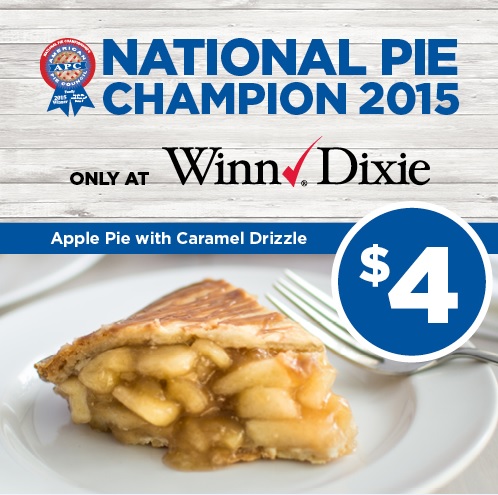
A month or so ago, following a workout, I popped into Winn-Dixie to pick up something to grill for dinner. Just inside the entrance was a display of pies promoting the chain’s newest variety, Apple Caramel Drizzle, which, the sign proclaimed, was awarded the 2015 National Pie Championship by the American Pie Council. (Forget the UN: The United States should fund this worthy organization if it truly wants to promote world peace and happiness.)

I don’t even like apple pie. On the other hand, if someone were to drizzle caramel over dog shit I’d probably try it so I picked one up. And that evening, after a healthy dinner of grilled chicken, I cut myself a slice.

There are some things you will never forget. Holding your newborn, for instance. Your first forkful of Winn-Dixie Apple Caramel Drizzle ranks right up there with life’s most profound experiences. This is the best pie not only in America but in the world. The sugary but still slightly crunchy apples in a gooey sauce. The flaky crust. The buttery caramel -- not too little, not too much, just the right amount to complement the filling and allow your mouth to know you've tasted perfection. There isn't a tarte aux pommes in all of France that could hold a candle to it. I allowed my wife one small slice then ate the rest myself, except for a small sliver I saved for breakfast but I couldn’t wait – I got up in the middle of the night to polish it off.

While I’ve always been a casual gym-goer, I now go every other day, which just happens to coincide with how often I need a new Apple Caramel Drizzle pie. Last week I went into full panic mode when I discovered my local store had sold out but, mercifully, the Winn-Dixie in a neighboring town had one (but only one) left. 

The good news: Thanks to an incentive to go to the gym every other day, my chest, arms and legs are nice and toned. My rapidly expanding pot belly, on the other hand, makes me look eight months pregnant. I don’t care.

Only a handful of my loyal readers live in states where Winn-Dixie supermarkets are located  -- the chain's web site says they're in Florida, Georgia, Alabama, Mississippi and Louisiana -- but trust me when I say that Winn-Dixie Apple Caramel Drizzle pie is worth moving from wherever you are to be near one.

I could go on and on but I need to go to the gym.


Saturday, April 16, 2016

The rewards club


Twenty-something blonde cashier at shoe store: Hi, are we a member of our rewards club?”

TD (placing four boxes on counter): No.

Cashier: Okay, give me a moment while I check these sizes. (She opens one box and looks at the tongues of both shoes to make sure the sizes match. After examining the second pair, she asks …)

Cashier: Are we a member of our rewards club?

TD: No.

Cashier (after examining the third and fourth pair). Okay, they all match up.

TD: Glad to hear it.

Cashier: Are we a member of our rewards club?

TD: Um … no.

Cashier (after scanning UPC codes on all four boxes): That comes to $231.82. Are we a member

TD (interjecting):  No! We most definitely aren't.

Cashier: Okay, slide your card. Is that credit or debit?

TD: Credit.

Cashier: Do you want your receipt in the bag?

TD: Sure.

Cashier (placing receipt in one of two bags and handing both to me): Okay then, here you go.

TD: Aren’t you going to ask us if we want to join the rewards club?

Cashier: Are you here with with someone?

TD: No. Just me.

Cashier: So why would I ask if you and someone else want to join?

TD: Because four times in the last minute you’ve asked, “Are we a member of our rewards club?”

Cashier: Well, do you want to sign up?

TD: No.

Cashier: Okay, have a nice day.

Saturday, April 2, 2016

Old Lives Matter


I always gave my mother, Ruby, a book for her birthday, which would have been tomorrow. Mom, who died last year at the age of 102, was a voracious reader. She stayed up late the night before she checked into the hospital for what should have been routine surgery to finish the latest birthday book I had given her.

I want to give Ruby one last birthday gift by writing about something that was important to her, the way our society treats the elderly.

Webster’s defines “elderly” as “rather old; being past middle age.” That requires defining what the term “middle age” means. Webster's says it means, “The period of life from about 45 to 64.”

I’ll turn 65 in November. Just eight months more until I am, by Webster’s standards, elderly.

While I don’t think of myself as elderly, some people clearly do. The tattooed twenty-something who held the door open for me at the gym yesterday. The ticket seller at the movie theater who extended the senior discount without bothering to ask for I.D. I grow old, I grow old, I shall wear the bottoms of my trousers rolled and get a free senior-sized soft drink at Wendy’s with any purchase of 99 cents or more.

While I’m just starting to confront the concept of my impending elderliness, my mother had to deal with it for nearly 40 years. Ruby hated being old because, as she learned, people tend to disregard old folks, particularly the uber-elderly – those 90 and up. And the older she became, the more she found herself disregarded.

Mentally, Ruby never deteriorated. Not. One. Whit. Not only did she never forget anything from her early years – she could easily recite entire poems, like Hiawatha or The Raven, that she had memorized as a schoolgirl – she, unlike many uber-elders who can remember picayune events from decades past but have forgotten what they ate for lunch, could rattle off the previous day’s closing price of Apple or AT&T.

Ruby’s worst nightmare was that she might someday become mentally infirm, as her older sister had in her final years, so she did everything she could to keep her mind sharp. She worked Sudoku puzzles, read two or three non-fiction books a week, played duplicate bridge, and cruised the Internet on her iPad.

I always joked that, when she died, we were going to donate her brain to science so pathologists could study it to see whether her sharpness was due to determination or to genetic luck. But we didn’t; she had a post-operative stroke the day before she died so her brain was damaged.

Physically, however, Ruby deteriorated as she aged and the deterioration accelerated once she reached her nineties. Her hearing failed. Her blood pressure sometimes surged into the stratosphere, requiring hospitalization. Following a series of falls in her late nineties, she had to use a walker. Despite her infirmities, she remained determined to continue living in her own house. It wasn’t until her ninety-eighth year that she finally conceded defeat and moved into an assisted living center. 

Judging strictly on the basis of her physical appearance, people who didn’t know Ruby tended to write her off as just another old person, someone to be treated like a child.

Two years ago I received a phone call from the head nurse at her assisted living center, inquiring if I wanted mom to receive a flu shot. “Why don’t you ask her?” I said. “She makes her own decisions.”

“She does?” the nurse replied, sounding astonished that I would even suggest such a thing. “Have you ever talked with her?” I asked. “No,” she admitted. This woman was in charge of dozens of elderly residents yet assumed that anyone mom’s age didn’t have the ability to make his or her own decisions.

Ruby was disgusted when I called to tell her the nurse would be stopping by. “She sits in her office all day thinking we’re idiots,” she said sadly.

My sister always drove Ruby to doctors’ appointments. Because our mother had trouble hearing, she would accompany her into examination rooms in case mom missed something the doctor said. While mom had outlived most of her long-time doctors, those who had known her for years addressed her directly, explaining what they were recommending. New doctors addressed my sister, referring to mom in the third person, like a pediatrician speaks to the mother of a toddler. “Don’t talk to me,” my sister would advise them. “Talk to her, she’s in charge. And speak loudly.”

In November, 2011, when she was still living in her own home, mom made the near-fatal mistake of opening her door to a home invader who kicked her, beat her and left her for dead. After attacking two more elderly women in their homes, he was arrested and charged with assault, battery and elder abuse, a crime for which he had already served a 20-year prison term. Mom refused to dwell on what happened and rarely talked about it.

Preparing for his trial, Ruby was deposed by his defense attorney who assumed that, because of her age, he would have an easy time making her appear less than certain about identifying her assailant.

“Had you ever seen (the perpetrator) before the day he allegedly showed up on your doorstep?” the attorney asked.

“No, mom replied wryly. “He and I don't run in the same social circles.”

“How is your eyesight?” he asked, thinking he could discredit mom because her vision, at her age, had to be iffy. “It’s 20/20 in my left eye and 20/40 in my right,” she told him.

“How would you know that?” he asked.

“Because I went to the eye doctor last Thursday and that’s what he told me. Would you like his name?”

The deposition wound up quickly as the attorney realized his strategy was doomed to fail.

But when mom later testified at her assailant’s trial, the local newspaper ran an above-the-fold headline, “99-year-old testifies.” It would have never printed that a “45-year-old testifies” or a “28-year-old testifies” but it implicitly discredited mom because of her age. Adding insult to injury, the paper revealed her name, something it didn’t have to do, which made her and her family – I’ll never forgive the Columbia (Mo.) Tribune – furious. “They made me sound like I didn’t know what I was saying, just because I’m old,” mom said bitterly.

The jury realized otherwise and the judge sent her assailant away for the rest of his natural life and then some. Reporting on the trial’s outcome, the Tribune went out of its way to point out that the African-American perpetrator was tried by an all-white jury, implying racial prejudice on their part, but didn’t acknowledge its own prejudice against old people that it had unwittingly revealed. The Tribune’s coverage caused mom nearly as much anguish as the crime itself had.

Horace is a friend we consider part of our family. For years, he has wintered here in Florida at his condo. At 96, he is not only mentally unimpaired, he’s in great physical shape. Last week he won a golf tournament in which men half his age were competing. While he would like to golf every day as he once did, he says that nowadays, when people find out how old he is, they don’t want to play with him.

Every Monday night his condo association holds a poolside potluck that Horace has attended for 30 years. This year, he says, he only went to a few of the parties because hardly any of his new neighbors – most of his friends who bought condos when Horace purchased his in the mid-1980s have passed on – will have anything to do with him. They assume he is either incapable of saying anything of interest or will soon be gone.

Horace flew C-47s around the Pacific during World War II.  Over Easter lunch, he was talking about the day, near the end of the war, he landed his plane on a roped-off Manila street that had been turned into a landing strip to enable him and his fellow airmen to pick up American prisoners of war who had been relocated to the San Miguel Brewery after being liberated from Japanese POW camps.

Coincidentally I had just finished a book about American POWs in the Philippines in which that daring street landing was mentioned. “That was you?” I asked. “Yes,” he said. “Mine was one of several planes that landed one after another at the brewery. They didn’t tell us before we took off for Manila who we were picking up but I’ll never forget how God-awful those men looked. They’d been starved and beaten for years.”

The people standing around the pool at his condo are making small talk about minutiae -- their golf scores, grandchildren, politics and the like. Little do they realize that the white-haired man sitting off by himself, balancing a plate of food on his lap, is a living, breathing history book, an American treasure the likes of whom we will never see again. Horace says that this is the last year he will winter in Florida. He has said that for 20 years but this time we sense he means it. 

There’s a lot of talk these days about lives that matter. Black lives matter. White lives matter. Women’s lives matter. Latino lives matter. Unborn lives matter. I have yet to see anything about a movement called “Old Lives Matter” and that’s a shame because they matter every bit as much as anyone else’s.

A month or so before she died, I asked mom what she, being presumably closer to death than I was, felt Christianity was all about. Is it about eternal life? About being reunited with those you lost on earth?

“Jesus's main message wasn't about heaven, it was about the Golden Rule,” she replied. “Being kind, doing unto others as you would have them do unto you.”

And that is how all of us, regardless of our religious beliefs or lack thereof, should treat everyone, especially the uber-elderly who almost universally find themselves the victims of age-related prejudice, even from people who think they harbor no prejudices at all.

It is safe to say that none of the uber-olds, whether they remain in full possession of their mental faculties or have lost some or most of them, set out to live as long as they have – there is no upside in outliving your contemporaries and those you love. But, because they have somehow managed to, they deserve and yearn to be spoken to, and treated, like the valuable members of society they are, and to be shown the same respect to which all people are entitled.

In other words, treat old people like you would want to be treated if you were in their shoes because, thanks to modern medicine, genetics, determination or a combination of all three, you just might find yourself in them one of these days.

Happy birthday, mom.

Wednesday, March 30, 2016

Smart phones in the hands of stupid people


Last week I attended a new business presentation made by executives of a major corporation whose name you would know instantly. I went to the meeting as a member of a committee of a not-for-profit organization that is charged with making a purchase worth more than $30 million, so, needless to say, we are interviewing a number of companies. The presentation was held at the local branch office of one of those companies.

This particular company called out all the troops. There were senior vice presidents, plain old vice presidents, managers and supervisors. Each executive, at one point, stood up and presented the specific capabilities for which he or she was responsible.

Let me preface what I’m about to say by acknowledging that I recognize that I’m an old fogey. I’ve been retired for five years. I have gray hair and wrinkles. I will admit I was a bit baffled by some of the technological aspects of the purchase we were discussing but I pretended like I understood.

But what I didn’t get – and refuse to understand – is why every executive in the meeting, if he or she wasn’t talking at any given moment, was looking at his or her smart phone. There was lots of wrist action, so I’m assuming they were answering text messages or responding to emails. Or, maybe, they were checking the stock market. Or Facebook. Or watching porn. Or TV. Or reading books. Or shopping at amazon. Or asking their significant others what they wanted to do for dinner. 

Whatever they were doing, they might as well have worn signs on their foreheads that said, “We don’t give a shit about your business." Sure, all of them had heard the spiels their co-workers were giving before, but it would have been nice had they left their phones on their desks, feigned interest and given the illusion they cared about our business. But none did.

If I were their boss, I would have, two minutes after the meeting ended, sent a text firing every executive who attended that meeting. All would have been in the unemployment line the next morning, where they could examine their smart phone screens at their leisure while scanning Monster.com or Craigslist or LinkedIn or however it is people find jobs these days, I have no clue.  

Technology is great, but not when it replaces common sense. Or common courtesy.

I could go on and on but my iPhone just dinged which means I have a text and you, my dear readers, can’t possibly be as important as whatever message it may contain so I’m finished here.

See what I mean?

Friday, March 25, 2016

America's favorite dachshund endorses Hillary


Today's commentary was written by Bonnie,
America's Favorite Dachshund, whose opinions
may not necessarily reflect the opinions of
tomdryden.com's editorial board.
November’s presidential election will almost certainly be my last. I’m turning 15 next month. I’ve already outlived most dachshunds.

I want to be sure the candidate I endorse in what will most likely be the last election of my lifetime, is the one who will do the best job for this country that has given me so much, including Cesar’s Canine Cuisine Rotisserie Chicken Flavor with Bacon & Cheese in Hearty Sauce. 

I have come to the conclusion that Hillary Rodham Clinton is that candidate. My reasons are simple: Mrs. Clinton and I have a great deal in common. 

Arkansas roots

Though she is an Illinois native, Mrs. Clinton first came into the national spotlight as the First Lady of Arkansas during her husband's five terms as that state's governor. 

I also have Arkansas roots, having been born in a Blytheville puppy mill that shipped me to a pet store in Connecticut whose owner, after forcing me to live in a cage for four months, put me on sale.

We’ve both lived in the White House

One day a man walked into the puppy store, saw that I was on sale, and asked to take me to a back room to, as I overheard him tell the clerk, “play with me” and “see if she is affectionate.” I was absolutely terrified. But, I was also desperate to get the hell out of that God-awful store, so I pretended to be playful and cute. Twenty minutes later I was in a car headed to my new home, which turned out to be a white house atop a hill.

Mrs. Clinton also resided in a white house but hers was in Washington on a flat and somewhat larger parcel of land.

We are both products of elite New England schools

Mrs. Clinton attended Wellesley, where she was president of her class, followed by Yale Law School.

Like her husband, I attended Georgetown, but not the one in D.C.  where he completed his undergraduate studies which, as anyone with a grasp of basic geography knows, isn’t is New England. My alma mater is the Georgetown Obedience School in Georgetown, Connecticut, from which I graduated at the top of my class. (Granted, I didn’t have much competition. My classmates included a pair of beagles, a poodle, a Labrador Retriever and a mongrel with the body of a Great Pyrenees and the brain of a Chihuahua). I’m certain I would have been chosen class president had elections been held.

We both lie

Mrs. Clinton is famous, even among her most ardent supporters, for her ability to stretch the truth when she thinks it is to her advantage to do so.  For example, “Chelsea and I had to dodge sniper fire when our plane landed in Bosnia" and “I turned $500 into $500,000 trading cattle futures on my own” when, in fact, a friend trying to court influence with her husband made 30 of the 32 trades.

I am not a liar to the extent she is but I will admit to being a lier. At my age I sleep 23 hours a day. So, in the mornings, I lie my left side. Afternoons I switch to the right. Evenings I lie in the fetal position on the sofa between the humans as they watch TV.

We both support Planned Parenthood

Mrs. Clinton is a staunch defender of abortion rights.

I support a less drastic method of birth control -- neutering. I firmly believe that not only females but males should be neutered. It is her misfortune that Mrs. Clinton didn’t have her husband neutered years before the Lewinsky scandal that tarnished his legacy.

We take what doesn't belong to us 

On Bill Clinton's final day as president, as he was busy signing pardons for his political cronies, Mrs. Clinton took government property including furniture and gifts given to the White House that didn't belong to her or the president. Following an investigation, the Clintons' ultimately repaid the government $134,000 for the items they took.

Every morning I steal my dachshund brother Billy Ray’s food by standing at the sliding glass door and barking, pretending I see something outside. Idiot that he is, Billy abandons his doggy dish, and runs to the window barking and growling at … nothing. As he is lunging at non-existent enemies, I circle back around the kitchen island and steal his food.

We blame others for our mistakes

Mrs. Clinton and her minions spun a story blaming the deaths of Americans during the Benghazi attacks on Libyan insurgents’ reactions to a youtube video that desecrated Mohammad when, in fact, they died because the State Department, which she was running at the time, ignored pleas for help.

I once took a dump under the buffet table while my parents were having a party then ran out of the room, leaving Billy, who was asleep under the table, to take the blame when the mess was discovered and people started fleeing not only the room but the house. I could have come forward and taken responsibility. But I didn’t.

In conclusion

I believe in my heart of hearts that Hillary Rodham Clinton is the only rational choice any American can possibly make for president this year. And if you’ll be honest and examine your heart, you’ll come to the same conclusion. Despite her many flaws, America will be better off being ruled by my fellow bitch than by a Marxist hippie, an inarticulate bleached blond billionaire, or a whack job who has zilch support from his fellow Republicans who consider him to be a total asshole even I wouldn’t lick.

For all these reasons,  I offer Hillary Rodham Clinton my endorsement, and my fellow Americans, my prayers. God help you. And me, if I’m still here come January 20, 2017.

Sunday, March 13, 2016

Voting drunk


Florida's winner-take-all presidential primary is Tuesday but the polls have been open for the last 10 days for early voting. I cast my ballot on Wednesday. And I was drunk.

Not drunk as in “I don’t remember who I voted for” but I was feeling no pain, as I would have most assuredly felt had I voted for that asshole candidate sober. Truth be told I’m not much of a drinker. One drink and I become chatty. Two and I’m high. Three and I throw up.

I never drink at lunch – swear to God  – but I’d made an exception that day because we were with old friends we hadn’t seen for years and were having a great time. I hadn’t eaten anything before we sat down so the alcohol from the two drinks I downed roared through my system like a freight train.

Up to then, I wasn’t even sure that I could bring myself to vote because I was so disgusted with the choices my party had served up, but the alcohol gave me liquid courage so I did it. I didn’t cast my vote because I believe in the candidate for whom I marked my ballot; I most emphatically don’t. I voted against that person's opponent(s).*

If your state's primary is coming up and, like most Americans, you find yourself disgusted with the choices but feel you really ought to vote, take it from me: Two Absolut Ruby Red Grapefruit Vodkas with tonic and a slice of orange on the rocks may be just what you need in order to be able to hold your nose and pull the lever, mark the ballot or whatever it is you do in your state. Or, if you live in Colorado or Washington where cannabis sales are legal, you can always smoke a doobie.

Be advised you will most likely feel worthless for the rest of the day. But look at it this way: So are the candidates from whom you’ll have to choose.


* As America’s Only Objective Journalist ®, I’m not revealing who I voted for. If I said “opponent” you’d know I voted for a Democrat because only two are still in the race. If I said “opponents” you’d know I voted for a Republican because there are still four in the race. So I said opponent(s). Read into it what you will.

Monday, March 7, 2016

Trespasses & debts & dunks & sprinkles


I grew up in Auxvasse, Mo., a town so small there were only five churches – one Presbyterian, one Methodist and one Christian (which is what the central Missouri branch of the Disciples of Christ called its congregations back then; my father always referred to its members as “Campbellites” which Wikipedia says is a “mildly pejorative term for followers of certain religious groups that have roots in the Restoration Movement whose most prominent nineteenth century leaders were Thomas and Alexander Campbell.” I can't imagine that dad, who never said anything bad about anyone, was aware he was using a pejorative term.) In addition, there were two Baptist churches, one for whites, one for African-Americans.

My family belonged to the church with the smallest congregation, the Methodists. On any given Sunday there were, tops, 40 people in attendance, half of them as old as Methuselah. For decades, the church’s treasurer, Pearl Houchins, who always wore a raspberry beret of which I am reminded whenever the Prince song by the same name comes over the radio, stood up at the end of services and recited the same report, which varied only by the numbers of attendees and the amounts collected.

“The Auxvasse Methodist Sunday School met Sunday (month, date, year) with a total attendance of X including X members and X visitors, and a collection of $XX.XX.”

While God surely appreciated Mrs. Houchins for her many years of service to the church, what undoubtedly earned her admission through the Pearly Gates were her secret recipes for the ethereal burnt sugar candy and buttery peanut brittle she distributed to the Methodist children every Christmas. She must have taken them with her because there’s nobody down here who knows how to replicate them and believe me, I’ve searched high and low.

When Methodists recited the Lord’s Prayer, we, unlike worshippers at the other churches in town, asked God to “forgive us our trespasses as we forgive those who trespass against us.” The other churches said it differently. They asked God to “forgive us our debts as we forgive our debtors.”

Even as a boy I found that weird because “trespasses” aren’t the same as “debts.” The former implies you have done something out of line. The latter means you owe someone for something.

The other churches baptized differently, too. Baptists and, if I recall correctly (I may be wrong here), the Presbyterians and Christians, fully immersed their members in galvanized tubs. The Methodist minister, on the other hand, sprinkled a few drops of water on the heads of the newly-saved, a ritual that was certainly less messy since the congregant was able to return to his or her seat rather than have to run into the back room to change out of wet clothes.

My grandmother was a Baptist and I occasionally accompanied her to revival meetings at her church. I much preferred the Baptist hymns to the Methodist ones. Baptist songs about fountains filled with blood drawn from Emanuel’s veins and Jesus being nailed to a tree were much more graphic and therefore interesting to my enquiring young mind than the tasteful hymns we Methodists sang like “Others” and “In the Garden.”

As one of the few kids in the Methodist Church, I took classes with Ross Howard, Kathy LaFon, Carla Foster and Dale Ray Rudd that were to culminate with our baptism. But when B-day arrived I backed out. At 11, I wasn’t ready to stand up and declare my sins because, as far as I could tell, I didn’t have any worth declaring – certainly not enough to swear I was ready to completely turn my life over to God because, even then, I was a bit of a control freak and had big plans to get out of Dodge. I was given the Bible I was to have received as a new member anyway since the minister had already inscribed it with my name.

Fifty-three years later I still haven’t gotten around to being baptized. That, I suppose, means I will spend eternity in hell while my fellow Methodists who went through with their sprinklings will spend theirs in heaven, gobbling up Mrs. Houchins’ candies without gaining an ounce or raising their bad cholesterol levels.

A decade or so ago I was visiting my mother the weekend the Auxvasse Methodist Church closed its doors for good, by which time it was down to a handful of members. Mom, my sister and I attended the final service. A pastor sent from the Missouri Methodist Conference in Fayette stood up and uttered a prayer deconsecrating a modest redbrick building that, for nearly 100 years, had witnessed happy events (including my sister’s wedding), sad events (including my father’s funeral) and baptisms (of just about every youngster who ever colored Joseph’s coat of many colors in Evelyn LaFon’s pre-school Sunday School class but yours truly).

The United Methodist Church sold the building to a congregation of Holy Rollers who, I am told, agreed to allow the stained glass windows honoring the church’s longtime members, including Mrs. Houchins, to remain in place. I hope those windows are still there because, even though I’m a fail when it comes to religion, all those people who made up that little church -- Sunday School Superintendent E.T. Pasley, who took me under his wing and gave me a job at his gas station after my father's death and his wife Neva who, for years, did my mother's hair; my seventh-grade teacher and church pianist Pauline Meador whose annual rambling rendition of the "Holy City" precluded the Easter sermon; her daughter Marge Lubbers, the only woman who could harmonize, and Marge's husband Dick, who always had a smile on his face; Jac LaFon who caught the catfish for the church's annual fish fry and his wife, Evelyn, one of the kindest, sweetest women I will ever know; Jess Burton, who boomed out the bass "below the line" chorus of "O How Sweet" whenever the congregation sang the hymn "Precious Name," whose wife was famous for her hickory nut pie; Mrs. Houchins' daughter Reba Middleton, who always wore an apron everywhere, even to church; Justine Foster who, every year, hitched a trailer full of stray dogs behind her Cadillac and took them to winter in Padre Island from whom, I swear, I got my love of dogs because it sure didn't come from my family; Nina Foster, who stitched the quilt my wife and I have slept under for 40 years; and Doc and Mildred Domann, my parents' best friends, among others -- will forever remain in my heart.

All this trespassing/debting/dunking/sprinkling and other small town church memories came back to me in a rush today when I encountered the above sign on a vacant lot during my daily 10-mile bike ride. Adjacent to the “No Trespassing” sign was a “For Sale” sign. The eight-acre lot, abutting the local high school and a block from the new world headquarters of the Hertz Corporation, would be ideal for high-end condos or attached villas. The developer who buys it will make a fortune.

I don’t know whether the members of Christ Community Ministries church, which owns the lot, say "trespasses" or "debts," or whether they dunk or sprinkle.

Whatever, I trust they will forgive me for trespassing a few feet over their property line to snap a picture for this blog, and am in their debt for erecting a sign that, for an hour or so this beautiful Spring afternoon, transported this 64-year-old back to a simpler, kinder, time when I believed that everything would turn out okay.

As, by and large, it has.

Sunday, March 6, 2016

The unimportance of being early


There are two types of people – those who insist on arriving early, and those who don’t.

My wife is one of the former. For some reason I’ve yet to fathom, she likes to arrive at airports three hours before flight time and, for movies, concerts and appointments, at least an hour early.

I, on the other hand, am one of those people who prefers to arrive at the last possible minute.

It all goes back to the early days of running my own advertising agency when, in order to impress clients with my responsiveness, I would start work on an assignment the moment I hung up the phone. As often as not, once work on the project was well underway, the client would call with a change of direction, which meant the work had to be revised or scrapped, or would cancel the assignment altogether. Clients, I quickly discovered, tended to sit on invoices for work they authorized but were unable to use because they didn't want their bosses to find out they had wasted money by hot-potatoing assignments to the agency just to get them off their desks. I often wound up having to remind clients, repeatedly, to pay bills for revised or canceled work and half the time they would try to negotiate me down to protect their own asses.

So, for most of my career, I started work at the last possible minute. I found that by doing so, a.) I was less likely to have to re-do it and b.) I produced my best work under deadline pressure. It drove my employees, who for some reason liked to go home around 5 p.m or so, crazy, but that’s the way I ran my business, even though I often wound up working nights, weekends and holidays including one Christmas spent in a recording studio.
  
In all that time my agency missed exactly one deadline. I was able to weasel my way out of that by claiming the client’s layouts were on a FedEx flight that had conveniently crashed overnight. By the time the layouts arrived at the client’s office one day late, the project had been cancelled and it took me 90 days to collect payment.

The net net is that, in business, I learned it’s a waste of time to be early for anything, a lesson I still apply to my personal life.  Plus, I enjoy seeing my wife hyperventilate.

Now that I’m retired, I occasionally give in to her unreasonable demands for early arrival just so I won’t have to listen to her complaints. Friday night, for instance, we went to a concert at a venue 15 miles from our house. She insisted we leave an hour and a half early, claiming we might get caught in traffic or have trouble finding a parking spot. We arrived 73 minutes early, time I could have used to ride my bike, go to the gym or binge-watch two episodes of Veep on HBO-To-Go. Instead, we wasted that valuable time in a nearby bar, which is why I don’t remember much about the concert.

Nowadays, if my wife is flying somewhere on her own, I drop her off at the airport, as she demands, three hours early. What she does there I can’t imagine. I am told that airports have restaurants where one can buy snacks and stores that sell reading materials, but I wouldn’t know since I’ve never walked down a concourse, I’ve always ran.

As I like to remind her, of the hundreds of flights we've taken together over the years, we've never once missed a plane. I'll admit that, returning home from a business trip years ago, I did have to beg a TWA agent, who had already rolled back the jet bridge when I got to the gate, to reattach it so I could board.

It cost me $50, which I palmed off to the agent discretely so none of the passengers who had irrationally arrived early for the next flight scheduled to depart from that gate could see it but, by God, he agreed. 


Tuesday, March 1, 2016

Trump finally sends the NY Times over the edge


The folks who run The New York Times are hysterical – beyond hysterical – at the thought that any American in his or her right mind could possibly be supporting Donald Trump.

How else to account for the following articles the Times has published on its Facebook news feed over the last three days? 

Donald Trump’s message resonates with white supremacists.  “Intentionally or not, Mr. Trump’s campaign is mobilizing white supremacists so much that he has their support despite awkward attempts to publicly disavow it.” Author: Jonathan Mahler.

What wouldn’t Jesus do? “What stuns me is how my fellow evangelicals can rally behind a man (Trump) whose words and actions are so at odds with the central teachings of our faith." Author: Peter Wehner.

Donald Trump retweets post with quote from Mussolini. “Donald J. Trump on Sunday morning used his Twitter feed to post a quote attributed to Benito Mussolini, the founder of the fascist movement, from a parody account.” Author: Maggie Haberman.

Goldman Sachs puts worker linked to Donald Trump on leave. "The only Goldman Sachs employee to contribute to Donald J. Trump's campaign has been placed on administrative leave." Authors: Suzanne Craig and David W. Chen.

Donald Trump elicits shock and biting satire in European media. "His nearly every move and pronouncement has been reported from Paris to Berlin to Helsinki." Author: Dan Belifsky.

If Donald Trump changed genders. "The Trump campaign’s success doesn’t say anything good about our progress toward gender equality." Author: Frank Bruni.

The Times’ penultimate anti-Trump story to date, “Measuring Donald Trump’s Supporters for Intolerance,” appeared on February 23, the day after the South Carolina primary. It reported that polls showed “nearly 20 percent of Mr. Trump’s voters disagreed with Abraham Lincoln’s Emancipation Proclamation which freed slaves in the Southern states during the Civil War. Only 5 percent of Mr. Rubio’s voters share this view. This isn’t about Trump. It’s about his supporters.”

As long as it was linking candidates to their supporters' views, the Times could have reported that, "More than 50 percent of Hillary Clinton's supporters believe it is acceptable to butcher a child in the womb under the auspices of birth control." That, unlike the Emancipation Proclamation, would have actually been relevant to the upcoming election since the next president will likely be appointing Supreme Court justices who could overturn Roe v Wade but, because the Times' editorial board supports abortion, it ignored that story.

While the media is, ostensibly, supposed to report the news objectively, it doesn’t and never has and the conservative media is as biased to the right as the liberal media is to the left. But the Times’ hysteria about Trump is, even for a newspaper that last endorsed a Republican for president in 1956, above and beyond when it comes to biased reporting.

Times’ writers seem genuinely mystified that anyone could find anything at all appealing about Trump. That’s because the Times is written by and for eastern liberals who, in their own ways, are every bit as parochial as conservative residents of the rural Middle West (a term the Times persisted in using to refer to America's heartland until a few years ago) and South. I say this as someone who grew up in a narrow-minded conservative rural Missouri town but spent most of his adult life living in narrow-minded liberal New York and its narrow-minded liberal Connecticut suburbs. Narrow-mindedness is a two-way street but you have to get out of your ivory tower and onto the street to fully understand the extent to which traffic flows both ways.

Perhaps if the Times would dispatch its reporters to flyover country to spend time with some of the millions of otherwise reasonable people who support Trump – and yes, there are, apparently, at least some who believe it’s not acceptable to own slaves – it would find that his popularity isn’t just a reaction to political views with which it disagrees, it’s the reaction of ordinary Americans fed up with being told how to think in the guise of “news" generated by media outlets like the Times and Fox News. It is richly ironic that both the nation’s leading left- and right-wing news outlets don't even attempt to disguise their fear of Trump, who refuses to kowtow to their editorial boards.

Maybe Trump is a fascist and a racist and a misogynist who believes that slavery shouldn't have been abolished. Perhaps he’s a child molester who tortures puppies for fun and has already selected the sites for the concentration camps to which he plans to send his political opponents for extermination.

If he is elected and turns out to be any of these things and the Times reports on it, a large percentage of the public isn’t going to believe them precisely because of the hysterical and misleading reporting it’s doing at this stage of the election.

The Constitution guarantees freedom of the press but with that freedom comes implicit responsibility for journalists to attempt to report the news fairly -- something the Times, whose slogan is "All the News That's Fit To Print," is abrogating in favor of hysterical backed-into-a-corner journalism that makes the National Enquirer look downright stately. 

On the off chance that Trump wins in November,  the Times editorial board would do well to get a grip right now and try to understand why his message seems to be resonating with millions of voters, rather than publishing ridiculous stories like the ones listed above lest it lose what little credibility it still has.

Like this post? Please share it by hitting one of the buttons below.